
Our Four-Pillar Action Framework
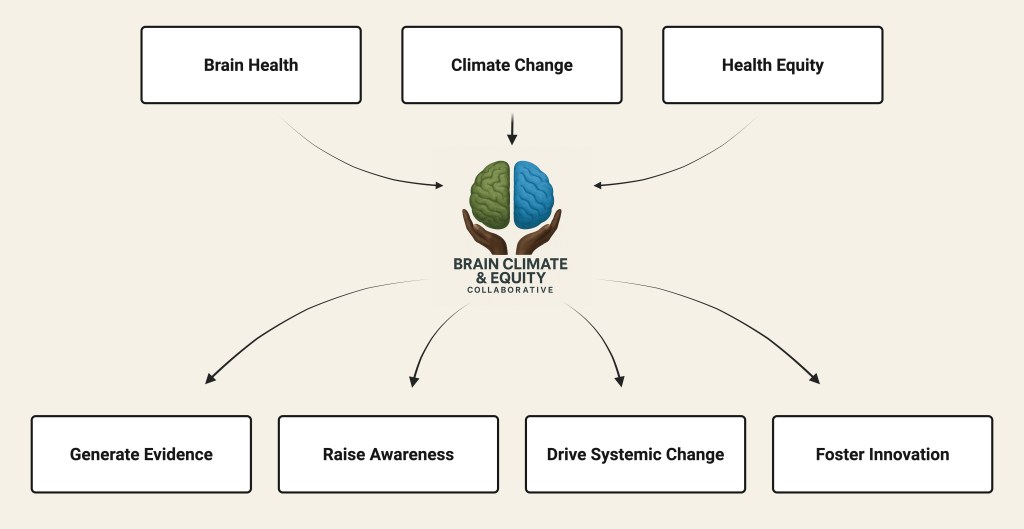
Brain health is on the front line of climate change. Our mission is to raise awareness of how climate change affects the brain and mitigate those impacts through evidence, education, advocacy, and innovation, so equitable brain health is possible for everyone.
We will accomplish this through our Four Pillars of Action:

Generate Evidence
We study how climate events such as heat, wildfire smoke, cold snaps, pollution, and more affect stroke, dementia, migraines, MS and more, especially in equity‑denied communities.
Key Initiatives:
- Systematic reviews on climate shocks and neurological outcomes.
- Epidemiological studies leveraging health system data.
- Community-based participatory research to capture lived experience.
- Partnerships with leading Canadian and global research institutions.
Ongoing Projects
Systematic Review: Conducting literature reviews on how climate exposures—heat, smoke, and pollution—affect neurological health, with a focus on equity-denied communities.
Evidence Synthesis: Summarizing complex research findings into digestible briefs.
Data Management: Building and maintaining datasets to support ongoing research projects.
Health Equity Analysis: Examining research data through an equity lens to identify disparities in affected populations.
Research Proposal Development: Securing grants and ethics approval to fund and conduct new studies.
Qualitative Research: Developing community-based participatory research, including designing interview guides, obtaining consent, and analyzing qualitative data.
Data Visualization: Designing dashboards and repositories that illustrate connections between climate exposures, brain health, and equity outcomes.
Raise Awareness
We engage clinicians, policymakers, academic institutes and the public through targeted educational campaigns, digital outreach, and knowledge-sharing resources.
Key Initiatives:
- Public-facing articles in outlets such as The Conversation.
- Clinical toolkits, handouts, and infographics for healthcare providers.
- Educational webinars, workshops, and conference presentations.
- A dynamic communications and social media strategy.
Ongoing Projects
Public-Facing Articles: Researching, co-writing, and editing articles for platforms like The Conversation, covering topics such as heat and pregnancy, healthcare’s carbon footprint, and “No Safe Level of Smoke.”
Social Media Content Creation: Developing social media content explaining key concepts.
Infographic Design: Producing visually engaging, accessible infographics on topics like wildfire smoke protection and heat impacts for vulnerable populations.
Website Content Development: Writing and synthesizing research knowledge hub and resources.
Newsletter Production: Gathering content, designing, and distributing monthly or quarterly newsletters featuring updates, partner spotlights, and opportunities.
Video Production: Producing educational videos for the public.
Media Monitoring: Highlighting relevant media mentions and press coverage in the brain health-climate-equity space.


Drive Systemic Change
We advocate for brain-health equity to be embedded in climate and health policy, while extending this knowledge to the public.
Key Initiatives:
- Policy briefs and white papers for decision-makers.
- Submissions to municipal, provincial, and federal committees.
- Partnerships with health organizations, medical societies, and municipalities (e.g., City of Hamilton).
Ongoing Projects
Policy Brief Development
Drafting policy briefs based our collaborative evidence generation to advocate for change at municipal and provincial levels. Translating findings into actionable recommendations that influence decision-making.
Stakeholder Mapping
Identifying and cataloging key policymakers, organizations, and influencers to target for awareness and advocacy. Strategically connecting evidence to impact.
Open Letters & Campaigns
Coordinating sign-on campaigns for public calls to action. Mobilizing community and professional support for brain health equity initiatives.
Evidence for Democracy Collaboration
Partnering with Evidence for Democracy to apply advocacy strategies in support of policy goals.
Municipal Policy Analysis
Reviewing city climate adaptation plans (e.g., Hamilton pilot) to assess the integration of health and equity considerations. Providing recommendations to enhance climate-resilient brain health in local policy.
Grant & Funding Support
Securing funding from foundations and other funding bodies to fund resources for Brain-CE research, advocacy, and innovation projects.
Foster Innovation and Community Solutions
We co-create practical, community-informed solutions through tech, social, and behavioural strategies to shift care from reactive to preventative.
Key Iniatives:
- Hosting hackathons and design labs (e.g., Neurexus 2026).
- Developing low-carbon healthcare tools and patient resources.
- Supporting community-led adaptation strategies.
- Exploring responsible partnerships for technological and social innovation.
Ongoing Projects
Collaborative Events
Organizing events, workshops, and symposiums at the intersection of brain health, climate and equity.
Hackathon Support
Serving as a “Challenge Champion” for the February 2026 NeuroNexus/14 Hackathon, guiding teams, shaping challenges, and contributing to innovative solutions.
Community Needs Assessment
Designing and conducting interviews or surveys to understand community concerns about climate and brain health, providing insights that guide ongoing research and programming.
Partnership Development
Researching and initiating contact with future community and research partners, including Indigenous organizations, disability groups, and city planners, to build collaborative networks.
Educational Material Development
Creating clinic handouts, patient information sheets, and other resources for clinicians and the public, translating research into accessible, actionable knowledge.
Arts-Based Engagement
Developing and facilitating creative workshops, such as concept mapping or collage, to engage communities in discussions about climate and brain health, fostering ongoing awareness and participation.

 Brain Climate & Equity Collaborative